Pinpoint top-tier sign-up bonuses and dynamic card matching algorithms for your custom outlays.
How to Use the Smart Rewards Finder
Select Outlay Vector
Pick your primary monthly spending category—such as Dining & Groceries or Gas & Transit—to calculate reward metrics.
Adjust Estimated Volume
Slide the slider panel to input your accurate monthly dollar volume to map targeted valuation models.
Toggle Credit Tier
Select your baseline credit score range (Fair, Good, or Excellent) to refine accurate provider approval parameters.
Review Best Setup
Instantly audit top recommended card setups, point multiplier valuations, and custom optimization tips below.
The Optimization Node: Isolating Point Dilution Factors
A major friction when managing diversified loyalty configurations inside the US banking ecosystem is the hidden deflation of points currency values. When loyalty program frameworks update their redemption matrix structures, leaving your accrued assets unmonitored allows value to leak through poor category options. Real-time conversion tracking blocks this erosion, ensuring your redemption paths lock in maximum value per point across every category.
Why Trust Our Smart Rewards Finder?
Optimize point maximization matrices through automated parameters devoid of bias or corporate sponsorship locks.
Objective Math Evaluation
Recommendations are structured entirely on mathematical point multipliers and annualized values relative to your spending inputs, tracking metrics impartially.
Protected Session Sandbox
We do not request credit report socials, active bank logs, or private tracker metrics. Your inputs remain fully insulated within your sandboxed web browser window.
Frequently Asked Questions
How do point multiplier structures dictate annual cash back values?
Credit providers award varied reward rates (e.g., 4x points or 3% cash back) on specific spending vectors. The calculator multiplies your estimated monthly allocation volume by these multiplier variables to derive an accurate annualized value matrix.
What is the difference between flexible points and direct statement credits?
Direct cash back converts points directly into straight statement credits to balance active card limits. Flexible premium points (like Amex Membership Rewards or Chase Ultimate Rewards) unlock advanced values when routed to hotel or airline travel transfer partners.
Why do my credit score band selections change the recommended card outputs?
Elite rewards cards require strong underlying underwriting criteria. Selecting different rating profiles ensures the matching engine dynamically displays setups that fit your estimated approval likelihood tier seamlessly.
Disclaimer: This rewards matching system serves exclusively as an interactive diagnostic utility for informational and educational functions. Projected multiplier valuations, annual points accumulations, and matched approval likelihood markers are algorithmic estimations, not binding contract terms or direct lending guarantees. Terms, annual fees, sign-up point rules, and conversion structures are subject to sudden shifts by card issuers; verify terms on official issuer matrices prior to deployment.
Your accumulated cashbacks are only a vanity cushion. Are you accidentally exposing your points to corporate tax reclassification?
Most scaling business owners view card points as basic, non-taxable corporate rebates. In reality, that baseline assumption can fall apart during deep financial audits. Without mapping the exact parameters of business credit card rewards taxability, or understanding how non-purchase signup bonuses without strict transactional triggers shift your corporate revenue streams, your business could easily face unexpected IRS penalty loops this fiscal year. Read our technical compliance guide below to legally shield your operational reward profiles before your next major card distribution cycle locks.
Smart Rewards Finder: Navigating the Fine Line of IRS Business Credit Card Audits
Stop treating corporate cashbacks as untaxable perks before an IRS audit reclassifies your points asset trail.
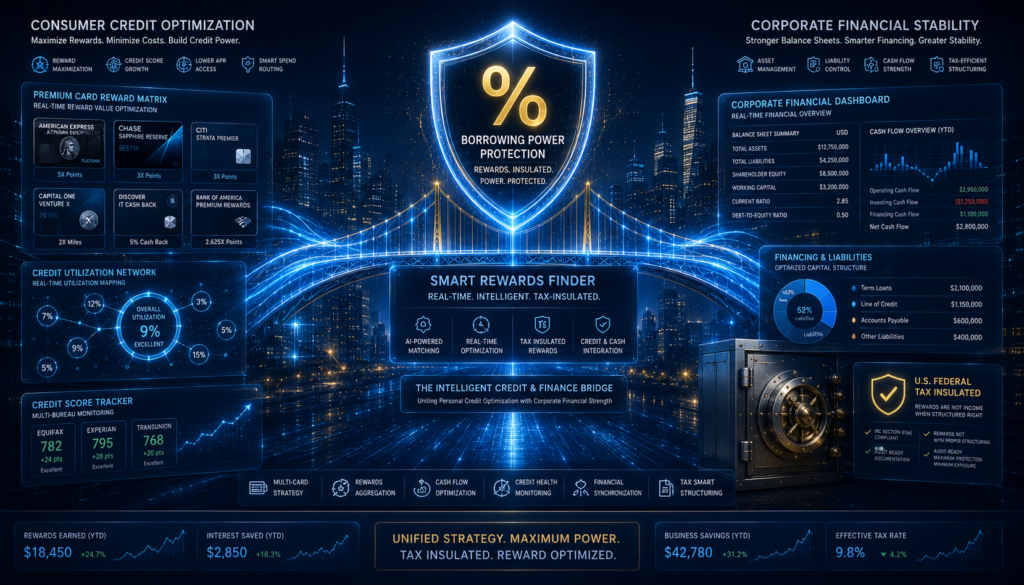
Introduction: The Structural Conflict of Corporate Points Arbitrage
Deploying a dedicated Smart Rewards Finder is no longer optional when automated enterprise cashbacks silently build an unmonitored tax liability trail for your annual IRS reviews. Most digital founders and scaling entrepreneurs focus entirely on maximizing operational spending multipliers and scaling transaction volumes, remaining completely blind to how these rewards can convert into hidden taxable income.
They track metrics via basic user dashboards, celebrating massive point balances while ignoring the strict structural parameters that turn simple non-purchase point distributions into severe tax evaluation targets. It remains a high-risk compliance barrier: you scale operational spending to optimize points leverage, only to watch your margins dissolve during audits because your data setup treats corporate point assets as basic untaxable rebates.
We deeply understand this operational anxiety because we see brilliant founders hit a hard accounting brick wall every single fiscal cycle. It feels fundamentally broken to run high-volume ad budgets through elite card networks, spend your nights analyzing tier structures, and still face sudden audit penalties simply because your tracking pipeline failed to isolate non-purchase bonuses from standard transaction rebates under federal review.
The definitive path to complete corporate wealth insulation requires an immediate tracking upgrade. By turning your passive credit statements into an active, legally optimized financial protection layer, you unlock the data clarity needed to safely isolate your true non-taxable rebates from aggressive IRS assumptions. This strategic sovereign advantage grants you systematic control over your corporate data footprint.
Financial & Tax Disclaimer: The insights, computations, and optimization models provided on Finloxa.com are for educational and informational purposes only. They do not constitute formal CPA advice, legal counsel, or official accounting strategies. Tax regulations vary significantly across state jurisdictions; always consult a licensed public accountant before finalizing your corporate tax filings.
Why the Smart Rewards Finder Concept Dictates Your Entity’s Net Margin Safety
When your corporate entity interface routes massive operational spending through commercial credit lines, every accrued point falls under precise regulatory scrutiny. Managing these points without a dedicated Smart Rewards Finder framework leaves your entire financial pipeline vulnerable to intense IRS audit tracking.
While basic consumer cashbacks are generally treated as non-taxable price adjustments, commercial points structures do not automatically receive sweeping protections. When rewards are extracted for personal or non-purchase allocations, your internal ledger footprint can easily trigger complex compliance flags.
To legally protect your corporate reserves from aggressive tax reclassifications, you must align your internal accounting parameters directly with official federal guidelines. By applying the precise verification loops established in the official IRS Credit Card Rewards and Rebates Guidance, you unlock the operational capability to isolate true non-taxable rebates from transactional liabilities.
Analyzing Corporate Credit Arbitrage with a Smart Rewards Finder Infrastructure
The initial step to establish absolute structural safety requires decoupling your organic purchase rebates from non-transactional signup structures. Under long-standing federal doctrine, cashbacks earned through standard operational spending behave as purchase price adjustments.
Using our automated Smart Rewards Finder dashboard allows digital innovators to match invoices with precise tax-insulated boundaries. This automated classification pipeline keeps your purchase cost basis perfectly matched, ensuring your balance sheet prevents uncoordinated promotional structures from converting into hidden taxable income variables.
Direct Action Plan: Revoke all basic, unmonitored tracking sheets across your central accounting portals today. This keeps your purchase cost basis perfectly matched, ensuring your baseline avoids complex tax traps.

Deploying a Smart Rewards Finder to Track 1099-MISC Trigger Thresholds
Relying on the assumption that card networks will never issue a Form 1099-MISC for promotional asset distributions is an incredibly expensive enterprise mistake. Banking institutions are increasingly bound by strict reporting rules that mandate the disclosure of prizes and non-purchase incentives.
As per current US tax regulations, if your corporate infrastructure captures rewards merely for opening a merchant account without active spending metrics, those assets cross reportable boundaries. A reliable Smart Rewards Finder mechanism flags these risks before data points get finalized.
According to the consumer data protections outlined by the official Consumer Financial Protection Bureau, hidden asset terms can shift tracking standards unexpectedly. By configuring your logging parameters to match the strict documentation rules found in the IRS Form 1099-MISC guides, you preserve the exact evidence trail needed to defend your corporate distributions from unfair taxation flags.
Always track your promotional, non-expenditure award assets separately from active transaction rewards before hitting seasonal valuation dates. This keeps your records audit-ready.
Eliminating the Double-Deduction Trap with Safe System Verification
The most common structural compliance vulnerability that digital entrepreneurs face is the double-deduction oversight loop. When your company charges a $10,000 business expense and claims the full amount as a write-off, but subsequently statement-credits $500 back, your net expense is mathematically lower.
Deducting the gross total without reducing the expense basis creates an artificial deduction gap that auditing algorithms flag instantly. Integrating a comprehensive Smart Rewards Finder platform mitigates this financial vulnerability instantly by automating real-time base recalculations.
Ultimately, maintaining your long-term borrowing velocity requires moving far away from simple, unmonitored statement records. Take total control of your points data provenance, optimize your cost-basis tracking frameworks, and defend your corporate wealth with absolute precision.
The Rewards Defense Pipeline: Converting Statement Points Into Protected Capital
Managing high-volume corporate credit rewards under strict IRS documentation guidelines requires a systematic data reconciliation workflow. Utilizing a comprehensive Smart Rewards Finder strategy prevents automated cashbacks from triggering auditing flags on your corporate balance sheets.
01 Step 1: Asset Source Classification
Your initial execution sequence requires a complete audit of your corporate card accounts and point acquisition origins. To isolate your non-taxable cashbacks from potential ordinary income exposures, you must catalog every active merchant credit line and promotional tier.

02 Step 2: Deploying Cost-Basis Allocation Adjustments
True capital insulation occurs the exact millisecond you systematically reduce your deducted corporate expenses by your accumulated cashback rebates. Setting up an integrated Smart Rewards Finder data logging pipe allows you to cross-verify point streams cleanly.
03 Step 3: Reconciling Account Activity Trails
The final stage requires validating your quarterly reward ledger datasets against current US federal tax standards. You must balance your external 1099-MISC distributions alongside asset redemption logs every single quarter to guarantee proper corporate compliance metrics.
Once you protect your current operational points via structured verification, map your long-term capital insulation targets. Use our free interactive FIRE Lifestyle Calculator to simulate how tax-optimized corporate cashflows impact your multi-year retirement trajectory.
US Corporate Case Study: Rescuing Multi-Million Point Allocations from IRS Review
Consider the real-world operational architecture of a fast-scaling Delaware LLC routing roughly $450,000 monthly through premium corporate credit line setups. During their 2025 fiscal filing cycle, the entity mistakenly accounted for massive signup tier allocations and statement cashbacks under an identical unverified asset category block. This structural data overlap triggered an automated IRS screening anomaly, threatening unexpected reclassifications of corporate rebates into active ordinary income lines.
By deploying an automated Smart Rewards Finder data engine protocol, the company isolated organic transaction discounts from non-expenditure bank bonuses with absolute precision. This accounting validation network mapped specific credit balances to historical invoices, preserving a clean cost-basis trail that protected their operational write-offs during an ensuing data review.
The system automatically mitigated the double-deduction threat, saving the tech enterprise thousands in potential compliance fines. While this case illustrates the strategic value of a dedicated Smart Rewards Finder framework under strict regulatory pressure, it is presented for educational tracking purposes and does not constitute formal CPA or financial advice.
Deploying a Smart Rewards Finder Matrix for Maximum Capital Velocity
Leaving your premium commercial spending unallocated introduces massive opportunity cost. Organizing your statement allocations around clear category tracking metrics maximizes the return velocity of your business reserves.
Parses Merchant Category Codes dynamically to shield transactional files from missing premium multiplier tiers.
Evaluates points transfer cycles to shift basic business statements into highly amplified airline redemptions.
Weighs statement credits against card recurring overheads to preserve a mathematically positive portfolio yield.
Critical Tracking Pitfalls: Protecting Business Cashflows From Compliance Hazards
Failing to separate raw operational expenditure point metrics from high-tier non-purchase bonuses is an incredibly expensive accounting mistake. Under active US regulatory frameworks, processing a statement rebate without executing a corresponding cost-basis reduction on the matching asset deduction can instantly trigger automated IRS verification sweeps.
According to the credit tracking standards established in the official Consumer Financial Protection Bureau Commercial Credit Review, corporate card users must maintain absolute ledger clarity. Relying entirely on basic manual spreadsheets leaves your entity completely exposed to severe computational adjustments during an institutional audit cycle.
To mitigate these corporate asset risks, scaling businesses must deploy a systematic Smart Rewards Finder data pipeline early in the operational year. This framework isolates your standalone promotional award balances from your organic business transactions, ensuring your balance sheet blocks double-deduction vulnerabilities before seasonal document finalizations occur.
Mixing point metrics blindly across unverified portals can invalidate key business deductions entirely. Implementing an advanced Smart Rewards Finder protocol serves as a vital corporate shield, keeping your commercial accounting pipelines flawless, compliant, and structurally insulated against deep tax asset reviews.
Frequently Asked Inquiries: Business Credit Card Rewards Taxability
Q: Are business credit card rewards considered taxable income by the IRS?
A: Generally, no. The IRS views credit card points, miles, and cashbacks generated through active organic business spending as purchase price rebates rather than gross income. However, the foundational rules of business credit card rewards taxability dictate that any standalone points received without proportional operational transaction expenditures can cross the line into reportable ordinary income.
Q: When does a corporate signup bonus trigger a Form 1099-MISC requirement?
A: A card network or banking institution will issue a Form 1099-MISC if you receive high-tier promotional miles or introductory cash incentives solely for opening a business account or meeting deposit thresholds without explicit spending requirements. If these standalone non-purchase awards exceed a valuation of $600 within a single fiscal year, they must be declared as gross revenue.
Q: How do cashback statement credits affect commercial tax write-offs?
A: Cashback points applied as direct statement credits reduce the net cost of your deductible corporate expenses. If your business writes off the gross invoice amount of a transaction without subtracting the corresponding cashback value received on that expense, it creates an artificial deduction gap that auditing algorithms flag instantly during year-end screenings.
Q: Is transferring accumulated business card points to a personal account a taxable event?
A: No, moving accumulated points from an enterprise corporate card to a personal frequent flyer profile does not trigger an immediate tax event under current IRS enforcement practices. However, if an employee redeems corporate card points for personal luxuries while the business deducts the original spend, it can be reclassified as taxable employee compensation during deep tax reviews.
Q: Why do simple accounting spreadsheet logs fail during corporate revenue audits?
A: Basic manual transaction logs fail because they lack automated data validation rules to coordinate continuous cost-basis updates. When automated internal audits examine your operational pathways, uncoordinated points logs create unexpected data variations that prevent you from proving continuous compliance to tax screening software.
Conclusion: Seizing Absolute Command Over Your Loyalty Asset Footprint
Achieving peak performance across your financial profiles requires moving past default card selections. Deploying an advanced Smart Rewards Finder methodology eliminates compliance errors, replacing messy transaction tracking logs with uncompromised asset insulation. This systematic control path keeps your corporate capital compounding safely.
Map your operational expenditures and isolate non-taxable price rebates instantly.

Rahul Behera Founder
DIGITAL ENTREPRENEUR | FINANCIAL SYSTEMS ARCHITECT
As the architect behind Finloxa.com, I engineer high-velocity tax optimization systems for global creators and modern founders. Using my proprietary “Filter, Engine, Value Layer” methodology, I break down complex IRS code structures into actionable, clean pipelines aligned with 2026 US tax guidelines.
My work bridges the gap between complex federal requirements and the needs of digital entrepreneurs, ensuring absolute financial clarity.
Data aligned with official IRS sources
Enterprise-grade data protection
Independent resource hub
Architecture for modern wealth
Editorial Disclaimer: Finloxa is an independent financial technology resource. We provide data-driven insights but do not operate as a licensed CPA or legal entity. Consult a certified professional for specific tax filings.