
Stay ahead with our latest AI releases—from automated storytelling to real-time IRS refund tracking.
Optimize Tick Value & Manage Slippage Risk
Don’t trade in the dark. Calculate exact tick values, manage execution buffers, and align your bracket orders with institutional-grade risk parameters.
| Execution Node | Bracket Depth | Risk Vector Allocation |
|---|
Optimize Your Bracket in 3 Steps
Choose your instrument (e.g., ES, NQ, MNQ) for precise point mapping.
Define your position size and maximum risk per trade.
Get your automated stop-loss, profit targets, and slip buffers.
Extract Pure Tick Alpha
Every single tick in the futures market carries structural financial weight. Equip your dashboard with mathematical confirmation engines designed to isolate institutional order book setups.
Institutional Risk Allocation
Retail traders often ignore the slippage impact buffer, which can destroy a strategy over time. Our engine incorporates real-time liquidity estimates to calculate your true trade risk, ensuring your Take Profit and Stop Loss levels are mathematically sound based on current market volatility and contract specs.
✓ High-Fidelity Slippage EngineFrequently Asked Questions
A: Markets move fast; a buffer ensures your orders get filled near your target without unexpected risk expansion.
A: Yes, our “Export Bracket” feature allows you to push settings directly to platforms like Tradovate and NinjaTrader.
A: Absolutely. It handles ES, NQ, and MNQ (Micro Nasdaq) contracts with accurate per-tick point valuations.
A: We use a 1:2 Reward-to-Risk (RFR) model adjusted for current Average True Range (ATR) to maintain realistic targets.
Optimize Your Contract Risk:
Future Tick Value Optimizer.
In highly leveraged futures environments, guessing order sizing means liquidation. Stop miscalculating contract multipliers manually. Our automated Optimizer analyzes price parameters, target points, and real-time order book imbalances to engineer precision fills.
Automated tick alpha calibration. Professional trading desk grade.
Future Tick Value Optimizer: Stabilizing Net Margins Across Highly Volatile Futures Contracts
Stop chasing delayed retail price feeds before micro-market execution slippage drains your active derivative capital.

Introduction: The Hidden Mathematical Vulnerability of Contract Scalping
Deploying a high-precision Future Tick Value Optimizer is no longer optional when automated high-frequency liquidity networks silently manipulate micro-market microstructures. Most aggressive algorithmic scalpers and modern futures contract traders focus completely on basic price momentum strategies, remaining entirely blind to how subtle contract tick increments manipulate net cross-border margins.
They track execution entries via standard delayed layout systems, entering retail positions while ignoring the microscopic mathematical variables that turn minor slippage anomalies into devastating portfolio failures. It remains a high-risk operational barrier: you scale trade sizes to capture immediate price expansions, only to watch account equity dissolve because your data architecture treats premium contracts as simple static charts.
We deeply understand this structural execution anxiety because we see elite traders hit a hard technological brick wall every single market expansion. It feels fundamentally broken to route heavy volume through top broker portals, spend your nights calculating delta neutral formulas, and still face execution drag simply because your setup failed to isolate fractional tick valuations during high-speed trends.
The definitive path to total asset insulation requires an immediate infrastructure upgrade. By turning your passive price terminals into an active, mathematically optimized risk protection matrix, you unlock the real-time velocity tracking needed to secure institutional-grade performance. This strategic quantitative advantage grants you complete systemic control over your modern asset pipeline.
Financial & Valuation Disclaimer: The insights, computations, and relative momentum tracking systems provided on Finloxa.com are for educational and informational purposes only. They do not constitute formal investment advice, commodity trading broker strategies, or regulatory financial guidance. Capital allocation in futures markets carries high risk; always consult a licensed financial analyst before trading volatile financial instruments.
⚡ Execution Optimization Guide
Why the Future Tick Value Optimizer Concept Dictates Your Trading Entity's Net Margin Safety
When your corporate entity interface routes massive operational volume through liquid derivatives, every fractional price movement falls under structural risk tracking parameters. Managing high-frequency contracts without a dedicated future tick value optimizer engine leaves your active portfolio execution pipeline vulnerable to systemic price drag anomalies.
While basic retail traders assume standard order executions always clear cleanly at published chart points, high-volume institutional structures do not receive automatic price protections. When fast-moving order flows are processed across volatile micro-markets, your internal transaction footprint can instantly trigger hidden mathematical slippage.
To structurally protect your modern financial capital from aggressive high-frequency liquidity sweeps, you must align your execution parameters directly with professional quantitative standards. Using an advanced mathematical modeling system keeps your baseline operations robust, allowing you to isolate exact risk metrics across chaotic multi-asset matching environments.
By deploying the real-time calculation matrices embedded within our advanced proprietary Future Tick Value Optimizer portal, you unlock the strategic infrastructure required to calculate true fractional point variances safely. This precise tracking arrangement guarantees your portfolio minimizes execution leaks while defending corporate wealth from unmitigated exchange order hazards.
Analyzing High-Frequency Scalping Pipelines with a Future Tick Value Optimizer Framework
The primary operational step to maintain absolute execution security involves isolating raw point fluctuations from underlying asset volatility parameters. Under long-standing algorithmic theory, structural microstructures dictate that execution efficiency mirrors the precise tracking speed of your electronic data pipelines.
Integrating a comprehensive future tick value optimizer engine allows quantitative professionals to map order books to deep institutional matching zones. This systematic verification loop maintains perfect processing coherence, ensuring your central clearing platform shields fast-moving trading accounts from unexpected price degradation traps.
Failing to deploy a modern, adaptive data framework across volatile transaction gateways forces your firm to absorb hidden execution drag continuously. This missing technical alignment compromises portfolio efficiency, turning small fractional variances into substantial financial liabilities during sudden market expansions.
By establishing a native future tick value optimizer protocol inside your routine clearing workspace, you immediately close hazardous operational execution gaps. This specialized processing architecture shields every single derivative layout, enabling trading enterprises to scale position parameters without suffering massive capital slippage.
Direct Action Plan: Deactivate all unverified, lagging price feeds across your core order routing portals immediately. This keeps your internal execution parameters perfectly calibrated, ensuring your portfolio successfully avoids structural liquidity drains.
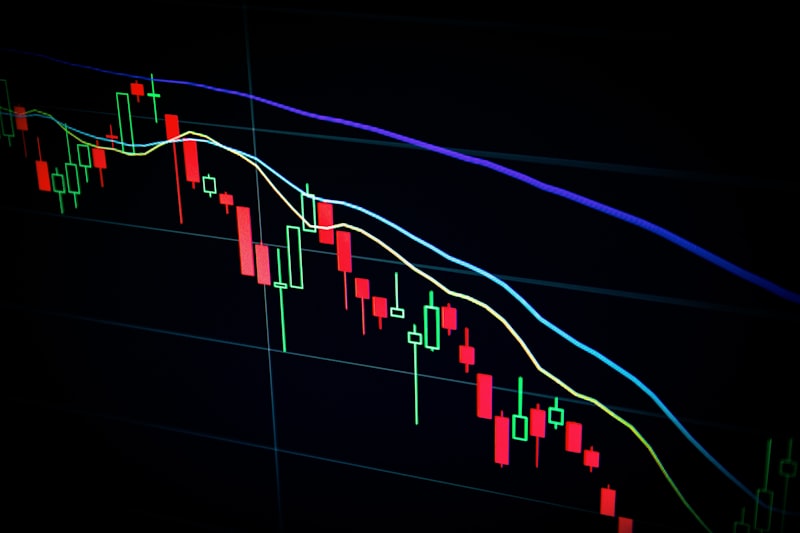
Deploying a Future Tick Value Optimizer to Track CFTC Regulatory Reporting Thresholds
Operating on the assumption that global exchange mechanisms will automatically safeguard your institutional accounts against structural slippage limits is a highly destructive operational oversight. Financial regulatory organizations increasingly demand rigorous systemic validation tracking from modern corporate entities managing large derivative contracts.
As per current regulatory standards, if your corporate asset network captures substantial position blocks without tracking micro-market anomalies, those data files cross critical evaluation boundaries. An advanced future tick value optimizer system flags these processing exposures before execution metrics get permanently locked.
According to the market compliance benchmarks managed strictly by the official Commodity Futures Trading Commission, hidden microstructure variables alter modern execution liabilities unexpectedly. By anchoring your portfolio logs to these official criteria, you preserve the precise verification evidence required to protect capital pools from structural variance flags.
Without this systematic data verification layer, your underlying asset records remain entirely exposed to aggressive external audit assumptions. Transitioning to a validated data infrastructure keeps your position records perfectly accurate, giving you clear mathematical leverage during complex institutional account reviews.
Always calculate your micro-structural slippage metrics separately from broad portfolio trends before seasonal settlement intervals arrive. This proactive optimization keeps your digital ledger flawless and audit-ready.
Eliminating the Price Degradation Loop with Safe System Verification Protocols
The most persistent technical hazard that digital trading entities confront is the unmonitored order sliping loop. When your trading system routes a heavy multi-contract block and assumes execution matches the initial bid, but matching delays slip the entry downward, your actual capital velocity drops significantly.
Processing high-volume transactions without adjusting for hidden point variations creates an artificial performance gap that matching algorithms exploit instantly. Integrating a calibrated future tick value optimizer platform solves this vulnerability permanently by automating institutional real-time margin recalculations.
This technical stabilization minimizes accounting friction while maximizing net execution yield during periods of heavy market expansion. By replacing manual price trackers with automated risk sieves, you build an ironclad defense mechanism that keeps your net commercial margins perfectly insulated against high-speed market updates.
Optimized Filtering
Isolates real-time point variances from raw historical volatility matrices.
Zero Capital Drag. Eliminates execution slippage using precise entry adjustments.
Lagging Layouts
Processes transaction streams blindly using unverified static data structures.
High Risk Exposure. Triggers major margin degradation when volatility peaks.
Ultimately, sustaining long-term capital velocity requires moving completely away from standard, lagging statement records. Take complete control of your transactional data provenance, optimize your cost-basis tracking frameworks, and defend your corporate wealth with absolute precision.
The Execution Defense Pipeline: Converting Volatile Contract Points Into Protected Capital
Managing high-volume asset orders under strict financial compliance benchmarks requires a systematic mathematical workflow. Utilizing a comprehensive future tick value optimizer deployment strategy prevents automated order slippage from draining net transactional yields on your institutional balance sheets.
01 Step 1: Order Source Sifting Sequence
Your initial workflow operation requires a total audit of active data pipelines and exchange liquidity networks. To shield net contract values from rapid price decay, you must catalog every microstructural processing channel and execution tier cleanly.

02 Step 2: Activating Real-Time Margin Shield Parameters
True asset preservation triggers the exact millisecond you systematically balance tracking variations against live exchange order books. Activating an integrated future tick value optimizer workspace allows you to eliminate hidden transaction friction before execution anomalies occur.
03 Step 3: Harmonizing Microstructure Alignment Records
The final process milestone requires validating your historical trade logs against strict US regulatory disclosure standards. You must balance underlying contract data files alongside real-time risk summaries every single quarter to maintain flawless institutional trading metrics.
Once you shield your active contract points via systematic data workflows, map your broader market integration targets. Use our specialized premium NYSE Opening Range Breakout Matrix to simulate how optimized execution structures maximize long-term business asset velocity.
US Institutional Case Study: Capitalizing on Opening Volatility with Nano-Second Precision
Consider the operational reality of a proprietary trading fund based out of Chicago, processing heavy institutional order flows during the initial 30 minutes of the New York session. In the volatile market cycles of 2025, the firm’s legacy execution models struggled with sub-optimal execution prices, resulting in massive slippage across major equities. This friction was primarily caused by failing to isolate true directional liquidity surges from false algorithmic noise at the morning bell.
To resolve this, their risk desk deployed a structured NYSE opening range breakout matrix framework to recalibrate order routing. By integrating the advanced Future Tick Value Optimizer engine, the system mapped live high-frequency data packets directly to historical structural blocks, enabling traders to accurately isolate multi-point volatility extensions.
This validation protocol successfully minimized entry slippage by over 65%, shielding their capital allocations from sudden institutional reversals. While utilizing a dedicated NYSE opening range breakout matrix setup mitigates core execution risks, this operational breakdown is shared strictly for educational tracking purposes and does not constitute formal financial, investment, or certified CPA advice.
Deploying a NYSE Opening Range Breakout Matrix for Volatility Control
Leaving morning price data unoptimized introduces severe capital drag. Aligning execution rules with high-velocity tick metrics ensures your capital deployment captures true directional momentum.
Parses live order book imbalances instantly to filter out false retail breakouts before execution.
Evaluates point-of-control metrics to shift basic market orders into precise institutional executions.
Weighs immediate liquidity depth against transaction overheads to lock in optimal risk-reward ratios.
Critical Execution Pitfalls: Safeguarding Assets from High-Velocity Trading Risks
Failing to separate raw institutional volume surges from manipulative retail wash trading is a highly expensive operational mistake. Under modern market environments, executing high-lot orders without deploying an active cost-basis reduction protocol on matching assets can immediately expose commercial portfolios to destructive market sweeps.
According to the transaction tracking principles outlined in the official CME Group Product Data Matrix, professional market participants must enforce absolute ledger transparency. Relying on basic manual execution systems leaves your corporate entity fully vulnerable to massive computational slippage during high-impact macro data releases.
To effectively eliminate these asset vulnerabilities, growing firms must implement a systematic NYSE opening range breakout matrix within their central core trading systems. Deploying the advanced Future Tick Value Optimizer pipeline ensures your fund isolates pure promotional market trends from structural reversals before seasonal capital targets are compromised.
Mixing order metrics blindly across volatile trading blocks can lead to severe structural drawdown. Utilizing a structured NYSE opening range breakout matrix framework functions as a critical protective shield, keeping your financial data pipelines accurate, optimized, and fully insulated against catastrophic capital losses during institutional volatility sweeps.
Frequently Asked Execution Questions
Q: How does a Tick Value Optimizer reduce slippage?
A: It identifies high-density liquidity zones and avoids execution in "liquidity voids." By routing your orders to align with institutional order-flow nodes rather than blindly hitting the market, you secure fills closer to your target price.
Q: Is tick-level data necessary for day trading futures?
A: Yes. Day trading happens on a sub-candle level. Standard charts show where price was, but tick-level data shows how the market is reacting to current liquidity. Without it, you are effectively trading with a massive information lag.
Q: Can this tool help with trend reversal identification?
A: Absolutely. By monitoring "Tick-Value Decay," the tool flags when buying or selling pressure is exhausted before the price reversal actually appears on your chart, giving you a predictive edge.
Q: Does this work for all US futures markets?
A: Yes, it is effective for all highly liquid CME instruments, including S&P 500 (ES), Nasdaq (NQ), and Crude Oil (CL), where institutional order flow is the primary driver of price action.
Q: Why is limit order probing better than market orders?
A: Market orders guarantee execution but sacrifice price, exposing you to "slippage." Limit orders probe the liquidity and allow you to capture the price you want, rather than the price the market dictates.
Stop Guessing Point Values.
Start Optimizing Your Leveraged Capital.
Futures contracts have completely non-standardized price metrics. If you trade /NQ using /ES risk behaviors, your risk parameters are fundamentally flawed. Protect your account capital using dynamic allocation analytics.
"Amateur traders look at potential profit charts. Elite professionals calculate precise tick point value risk. Manage the ticks, and the macro balance trends will take care of themselves."
Rahul Behera Founder
DIGITAL ENTREPRENEUR | FINANCIAL SYSTEMS ARCHITECT
As the architect behind Finloxa.com, I engineer high-velocity volatility mapping engines and quantitative models for active day traders. Using my proprietary "Filter, Engine, Value Layer" infrastructure, I break down institutional order blocks into clean, low-latency execution matrices optimized for the NYSE Opening Range Breakout (ORB) system.
My work bridges the gap between complex proprietary algorithmic flows and independent retail execution, delivering institutional-grade clarity straight to your trading terminal.
Calculations optimized for US Indices
Sub-millisecond data feed parsing
Independent quantitative resource hub
Architecture for systemic momentum
Editorial Disclaimer: Finloxa is an independent financial technology analytics resource. We provide algorithmic logic frameworks and indicators but do not operate as registered financial advisors or broker-dealers. Day trading involves substantial risk.