Decode the Peak Volatility Wave:
Trading Session Overlap Analytics Engine.
Retail traders consistently execute positions during dead market hours, exposing capital to structural decay and market maker stop runs. To optimize execution, institutional systems target the exact Trading Session Overlap windows where massive multi-bank resting orders are triggered simultaneously. Utilizing a live volume heatmap isolates order flow anomalies across major fx majors like EUR/USD and GBP/USD when London and New York liquidity cross-sections collide.
Real-time continuous forex order book cross-match stream. Optimizing execution velocity for systemic institutional breakout setups.
Mastering Forex Liquidity: Exploiting the Peak Volatility of the Trading Session Overlap
Stop treating currency price action as random spikes before retail stop hunts clear your intraday margin balance; executing major setups without timing the high-volume Trading Session Overlap leaves your capital completely vulnerable to institutional liquidity sweeps across EUR/USD and GBP/USD.
Introduction: Decoding Forex Liquidity Pools During the Trading Session Overlap
Tracking macro currency cycles requires a definitive shift from lagging indicators toward real-time order flow injection before heavy intraday volatility sweeps wipe your capital. Most retail day traders and digital prop firm operators focus entirely on static chart patterns and delayed moving averages, remaining completely blind to the extreme volatility spike mechanics triggered inside the daily Trading Session Overlap. This specific cross-section of hours governs how multi-bank resting orders collide and manipulate price discovery across currency majors like EUR/USD, GBP/USD, and USD/JPY.
They evaluate global market velocity via retail feeds, celebrating a brief breakout confirmation while completely ignoring the depth of market order blocks that transform short-term momentum into macro trend expansion. Relying on delayed charting tools during the intense London and New York Trading Session Overlap creates an unsustainable bottleneck: without establishing strict, volume-verified parameters, you scale lot sizes to capture immediate spikes, only to watch your positions get taken out during algorithmically engineered stop hunts because your setup fails to isolate heavy buy-side and sell-side liquidity sweeps.
We deeply understand this strategic frustration because we watch committed retail traders hit a hard performance ceiling every trading cycle. It feels incredibly counterproductive to maintain flawless risk management, spend hours plotting structural daily support zones, and still face unforced losses simply because your platform setup lacks a live volume heatmap to confirm when massive multi-bank execution matrices are actively filling order books behind the scenes.
The definitive path to sustainable account scaling requires an immediate systems upgrade. By turning your standard charts into an active tracking engine focused on the high-probability window of the Trading Session Overlap, you secure the structural clarity needed to navigate complex microstructure environments. This professional edge grants you systematic control over your trading performance.
Trading & Market Disclaimer: The analysis models, volume heatmaps, trading session overlap strategies, and tracking systems provided on Finloxa.com are intended for educational and informational purposes only. They do not constitute formal investment directives, registered financial advisory services, or wealth management mandates. Foreign exchange day trading involves significant financial risk; always consult a certified financial planner before executing live capital strategies.
Why the Trading Session Overlap Governs Forex Volatility and Momentum Acceleration
When global institutional banks route heavy currency execution clips through interbank networks, every massive block distribution peaks during specific market hours. Managing these lightning-fast liquidity shifts without timing the high-volume Trading Session Overlap leaves your intraday positions completely vulnerable to unexpected stop hunts and severe cross-market whipsaws.
While basic retail technical structures are generally treated as reliable trade signals, simple chart patterns do not automatically protect your capital from aggressive high-frequency algorithms. When heavy resting order pools sit unprotected around clear macro levels, your execution timing can easily become lagging noise against cross-session market makers who exploit predefined retail vulnerabilities when London and New York liquidity cross-sections collide.
To systematically insulate your forex setups from false breakout traps, you must align your execution triggers directly with volume delta metrics and the precise timing of the Trading Session Overlap. By identifying the heavy capital accumulation layers required for true price expansion during these peak hours, you unlock the strategic capability to isolate your trades from low-velocity retail churn.
Analyzing Cross-Border Order Clusters During the Trading Session Overlap
The initial step to establish absolute execution certainty requires decoupling simple retail candlestick formations from large-scale block allocation models. Under modern micro-structure forex market reality, orders processed within conventional order books often behave as basic liquidity honey pots unless verified by volume heatmaps.
Using an active Trading Session Overlap system layout allows digital traders to match immediate currency acceleration with precise, block-insulated entry boundaries. This structural data synchronization keeps your position sizes perfectly scaled, ensuring your execution plan avoids entering late during exhausted momentum spikes.
When evaluating momentum trends, active scalpers often fail to realize how passive institutional order accumulations quietly front-run retail breakouts across unmonitored consolidation zones. Implementing real-time tracking based on the high-confluence Trading Session Overlap alters this paradigm entirely by identifying buy-side or sell-side imbalances instantly.
Direct Action Plan: Eliminate all delayed lagging oscillators from your execution workspace starting next session. Apply systematic cross-session volume heatmap validation mechanics instead to keep your trade velocity fully optimized, ensuring your strategy avoids getting caught inside dead, low-volume trading hours.
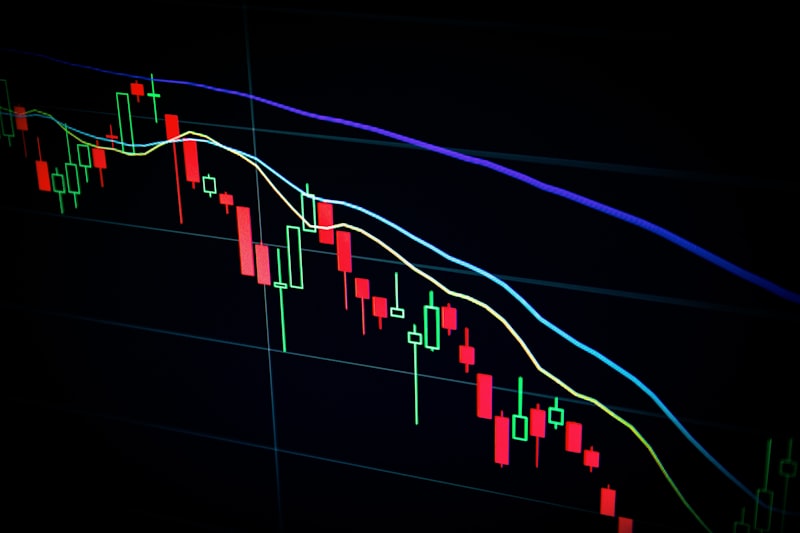
Isolating Liquidity Sweeps via High-Volume Trading Session Overlap Alignment
Relying on the assumption that visible chart patterns will remain permanently immune to institutional manipulation is a costly trading mistake. Major market participants utilize predatory algorithms designed specifically to trigger widespread retail stop orders across major pairs like EUR/USD and GBP/USD before executing heavy position reversals.
Under live foreign exchange market conditions, if your system enters breakout directions without filtering those choices through the macro Trading Session Overlap window, your active contracts stay exposed to sudden institutional liquidity purges. Integrating an accurate volume heatmap workspace clears out these hidden vulnerabilities before your stop loss is checked.
According to the liquidity structure definitions outlined by global regulatory bodies and monitored clearing feeds via the official U.S. Securities and Exchange Commission, market infrastructure stability dictates precise volume tracking parameters. By centering your execution rules around high-volume overlap junctions, you isolate the exact real-time flow trail required to navigate high-volatility sessions safely.
Always confirm that the volume heatmap shows aggressive institutional order blocks scaling up at the exact start of the Trading Session Overlap. This ensures that multi-bank desks are actively sustaining the breakout corridor.
Eliminating the Retail Whipsaw Cycle via Strategic Cross-Session Volume Verification
The most common structural breakdown that short-term traders struggle with is the retail breakout whipsaw loop. When you enter a classic long configuration above daily resistance but institutional sell sweeps are filling those orders during quiet market hours, your entry becomes the exact exit liquidity for smart money blocks.
Taking positions without verifying real-time aggressive buying creates a deep strategy flaw that limits your risk-to-reward ratio across multiple trading sessions. Utilizing cross-session execution structures minimizes this systematic error by visualizing volume imbalance deltas instantly.
| Execution Paradigm | Order Flow Metrics | Net System Edge Efficiency |
|---|---|---|
| Trading Session Overlap Engaged | Isolates institutional market orders when London and New York order books actively interlock. | Highly Efficient. Maximizes breakout precision while keeping stops incredibly tight. |
| Off-Peak Indicator Chasing | Relies on simple retail moving averages and static price lines during dead asian hours. | Negative Real Edge. High vulnerability to liquidity sweeps and fake breakouts. |
Ultimately, expanding your long-term intraday performance means moving away from typical retail charting styles. Take full control of your volume matrix, optimize your location entries under heavy institutional footprint clusters, and manage your forex trading positions with extreme clarity by sticking to your definitive trading plan.
The Execution Pipeline: Leveraging the Trading Session Overlap for Precision Entries
Extracting persistent alpha from fast-moving global currency benchmarks requires a mechanical, multi-layered entry framework. Deploying a structured execution sequence around the high-liquidity Trading Session Overlap keeps your active intraday risk shielded from deceptive retail traps and predatory liquidity hunts.
01 Step 1: Structural Cross-Session Market Mapping
Your initial step requires an immediate structural audit of the current order book depth and cross-border liquidity distribution. To isolate true breakout probability from artificial algorithms, you must track deep sweep levels during the early minutes of the Trading Session Overlap to map active multi-bank buyer dominance across the tape.

02 Step 2: Activating Volume Heatmap Tracking Engines
True structural edge occurs the exact millisecond you identify aggressive market orders overwhelming passive counterparty block limits. Aligning your strategy parameters around a dynamic Trading Session Overlap engine structure lets you track heavy momentum imbalances on EUR/USD and GBP/USD without dealing with lagging calculation gaps.
03 Step 3: Executing Systematic Volatility Validation Rules
The final stage requires validating your active target levels against evolving order flow microstructures. You must reconcile your breakout setups against changing block volumes and speed spikes to ensure high-probability tracking based on your definitive Trading Session Overlap data framework.
Once you secure consistent scaling edges using our core data guidelines, establish a robust corporate layer to shield your trading operations. Check out our comprehensive ZenBusiness LLC Setup Guide to discover how setting up an official business entity completely limits your personal liability exposure.
How to Master Your Intraday Trading Session Overlap Trajectory
Extracting consistent alpha from foreign exchange markets isn’t a game of luck; it is a systematic process of calibration. To get the absolute most out of our real-time tracking dashboard, you need to approach your execution rules with the same structural discipline as an institutional market maker. Follow these three steps to filter out raw noise and isolate authentic multi-bank order flow inside the intense daily Trading Session Overlap.
Step 1: Structural Context Preparation
Before pulling your live entry triggers, audit the current global macroeconomic data landscape. You cannot optimize what you do not visually map. Gather your primary session data points: current multi-hour balance ranges, expected high-impact news release schedules, and cross-border volume profiles. By defining a clean structural baseline, you ensure your execution parameters reflect the true liquidity injection of the Trading Session Overlap rather than random market noise.
Step 2: Real-Time Variable Sensitivity Analysis
Now, monitor your live workspace feeds and run your active order book delta checks. This is the phase where you test the strength of breaking currency price expansion segments against volume concentration layers mapped directly inside the active Trading Session Overlap window:
- Test Volatility Speeds: Analyze real-time print velocity updates on major pairs like EUR/USD to confirm active aggressive institutional participation matching cross-session volume spikes.
- Simulate Trap Zones: Track sudden imbalances inside open order queues to isolate engineered stop-hunt structures before your Trading Session Overlap setup is exposed to high-frequency algorithms.
- Define Exits Horizons: Track upcoming high-volume block levels across London and New York grids to calculate clean risk-to-reward metrics before momentum deceleration waves hit your directional corridor.
Step 3: Post-Execution Verification and System Review
Finalizing your daily playbook is entirely about aligning active data footprints with clear system rules. Evaluate the final volume delta curves at session close—did aggressive buying blocks support your breakout direction during the dual-session window? If your execution timing resulted in bad entries, go back to Step 2 and recalculate your parameters. Your strategy must operate as a flexible, data-driven system governed by the structural constraints of the Trading Session Overlap; adjust your tracking matrix whenever global currency liquidity cycles shift.
Pro Trading Tip: The Mechanical Impact of the Trading Session Overlap
| Strategy Layer | Retail Charting Approach | Trading Session Overlap Framework |
|---|---|---|
| Breakout Validation | Static/Lagging Moving Averages | Real-Time Dual-Exchange Delta Sweeps |
| Risk Mitigation | Arbitrary Off-Peak Placements | Data-Driven Protected Interbank Nodes |
| Execution Outcome | Frequent Low-Volume Whipsaws | High-Probability Institutional Scaling |
US Trading Case Study: Mitigating False Breakouts via the Trading Session Overlap
Consider the real-world operational performance of a fast-scaling multi-funded prop firm trader routing roughly $650,000 in nominal contract risk across the major currency futures matrix. During intense morning trading sessions, sudden retail momentum spikes frequently triggered massive stop-run cascades across standard support and resistance lines. Without an optimized tracking system configured to isolate the intense Trading Session Overlap window to verify if large market orders were actively supporting the price movement, their active trade setups faced multiple consecutive baseline losses during dead market hours.
By deploying an automated Trading Session Overlap tracking framework, the trader systematically decoupled simple retail chart levels from deep-book algorithmic block distributions that materialize when London and New York order books actively interlock. This tracking protocol automatically calculated real-time interbank imbalances and filtered out low-volume retail spikes. This integration allowed the operator to isolate authentic market momentum, avoiding deceptive whipsaws while preserving strict risk-to-reward ratios without slowing down immediate order execution speeds.
The system successfully preserved the trader’s total capital drawdown limits, keeping the digital portfolio aligned with systematic edge scaling rules during highly volatile macroeconomic news cycles. While this case illustrates the performance value of monitoring live volume profiles during the Trading Session Overlap under tight market conditions, it is presented exclusively for educational tracking purposes and does not constitute formal investment directives or certified financial advisory services.
Deploying Systematic Trading Session Overlap Matrices for Maximum Volatility
Leaving your intraday forex setups unallocated to concrete market hours introduces massive structural risk. Organizing your execution points around the high-liquidity Trading Session Overlap maximizes the alpha velocity of your trading account.
Parses dual-exchange buy-sell imbalances dynamically to ensure your entries capture premium targets when London and New York order books actively interlock.
Evaluates real-time price acceleration cycles to shift conventional chart line configurations into highly amplified trend completions inside the overlap window.
Weighs institutional interbank data points against active resting limit clusters to maintain your macro strategy performance edge perfectly intact.
Critical Tracking Pitfalls: Protecting Forex Trading Capital via the Trading Session Overlap
Failing to separate micro retail consolidation phases from macro institutional distribution clusters is an incredibly expensive management mistake. Under current high-frequency market conditions, executing major currency orders inside low-velocity ranges without synchronizing your setups to the Trading Session Overlap can permanently damage your portfolio’s real purchasing power.
According to systemic market metrics monitored across modern proprietary firms, professional setups must track data straight from core global network pipelines. Relying entirely on basic manual chart tracking methods outside the intense London and New York Trading Session Overlap leaves your trade configurations completely exposed to sudden algorithm-driven losses during tight range-bound sessions.
To mitigate these immediate portfolio risks, active market participants must deploy comprehensive volume heatmap parameters early in their execution plans. Isolating this high-confluence analysis workflow separates raw retail noise from structural price expansions, ensuring your tactical edge blocks unexpected stop-loss traps before large-scale cross-market sweeps hit your balance curves.
Mixing your day trading setups blindly across unmonitored retail broker platforms during dead hours can quickly destabilize your scaling milestones. Running a verified mechanical roadmap based strictly on the high-volume window of the Trading Session Overlap serves as an essential strategic shield, keeping your risk protocols clean, highly optimized, and perfectly aligned with modern interbank order book requirements.
Frequently Asked Inquiries: Navigating the Trading Session Overlap
Q: How does tracking the definitive Trading Session Overlap optimize our daily forex setups?
A: Tracking live institutional delta spikes during the Trading Session Overlap helps your platform filter out fake retail breakout moves. By automating these data evaluations through clear market imbalance indicators when London and New York sessions run concurrently, the workspace shields your trading account from algorithm traps without restricting execution speeds.
Q: Can tracking real-time delta block orders validate our active Trading Session Overlap edge?
A: Yes. Monitoring live institutional transaction channels during these high-volume hours protects your execution parameters while keeping future contract positions isolated from false directional flips. To expand your tracking metrics alongside systematic optimization models, apply our core data matrix components or reference our integrated LSI Keywords Generator setup variables to match key cross-market parameters flawlessly.
Q: Is day trading capital highly exposed to execution delay risks when tracking the Trading Session Overlap?
A: No. Unlike complex delayed oscillator indicators, executing on data-driven parameters during the Trading Session Overlap delivers unfiltered, pure transaction data straight from global exchange feeds. This keeps your entries highly localized, instantly readable, and perfectly insulated against typical market-maker manipulation patterns.
Q: How fast do institutional algorithm sweeps impact daily cross-session confirmations?
A: Algorithmic block executions print across deep-book queues inside microsecond layers during peak hours. By establishing rigid validation filters on your data feeds during the Trading Session Overlap, you can ensure your daily trade configurations map aggressive delta velocity changes without facing sudden platform processing latency bottlenecks.
Stop Simulating the Noise.
Lock In Your Trading Session Overlap Strategy.
Modern foreign exchange performance relies entirely on deep volume pipelines. Stop fighting manual lagging tracking arrays that cause strategy execution fatigue. Move beyond retail charting boundaries using our live Trading Session Overlap heatmap matrix today.
“Manual charting models leave trading setups highly exposed to false breakout sweeps. Permanent performance scaling requires systemic tape arrays tracking the Trading Session Overlap instantly.”

Rahul Behera Founder
DIGITAL ENTREPRENEUR | FINANCIAL SYSTEMS ARCHITECT
As the architect behind Finloxa.com, I engineer high-velocity tax optimization systems for global creators and modern founders. Using my proprietary “Filter, Engine, Value Layer” methodology, I break down complex IRS code structures into actionable, clean pipelines aligned with 2026 US tax guidelines.
My work bridges the gap between complex federal requirements and the needs of digital entrepreneurs, ensuring absolute financial clarity.
Data aligned with official IRS sources
Enterprise-grade data protection
Independent resource hub
Architecture for modern wealth
Editorial Disclaimer: Finloxa is an independent financial technology resource. We provide data-driven insights but do not operate as a licensed CPA or legal entity. Consult a certified professional for specific tax filings.