
Explore the top-rated AI and business tools used by thousands of creators and entrepreneurs daily.
Capture Alpha with Real-Time Arbitrage Discrepancies
Don’t let price gaps slip away. Track volatility breakouts and execute profitable arbitrage trades across decentralized and centralized exchanges simultaneously.
| Venue Pair | Spread Depth | Arb Momentum |
|---|
Smart Scanning in 3 Steps
Pick your preferred chain: SOL, ETH, BTC, or Cardano.
Toggle between DEXs and CEXs to highlight gaps > 0.5%.
Execute trades using our live spread engine and gas-adjusted data.
Exploit Fragmented Liquidity
Digital asset markets are highly disconnected across global order books. Equip your desk with real-time volatility tracking and institutional spot-to-perpetual spreads.
Precision Arbitrage Architecture
Our scanner is built on a Cross-Chain Orderbook Flow Engine. Unlike simple price tickers, we calculate the “Net Post-Gas” profit for every arbitrage opportunity, ensuring that your trades are actually profitable after blockchain fees. We provide the raw data transparency needed to navigate highly fragmented crypto markets.
✓ Fee-Adjusted Profit MetricsFrequently Asked Questions
A: It signals an asset experiencing extreme price movement and volume spikes, often indicating a shift in market trend.
A: It subtracts network fees from your potential gain, showing you the real profit left in an arbitrage trade.
A: We scan major CEXs like Kraken and Coinbase, alongside popular DEXs like Uniswap and Jupiter.
A: This is an analytical scanner. You must manually execute the trade on your preferred platform to capture the discrepancy.
Extract Decentralized Spreads:
Crypto Volatility & Arbitrage Scanner.
Liquidity mismatch across fragmented crypto platforms creates pure mathematical inefficiencies. Stop chasing lagging trend projections. Our high-frequency scanning matrix maps spot order depths across global liquidity arrays to capture immediate price variances.
Cross-platform delta identification matrix. Institutional speed index.
Crypto Volatility and Arbitrage Scanner: Navigating Cross-Exchange Liquidity Inefficiencies
Stop chasing erratic price pumps before unmonitored spread slippage drains your digital asset curves.
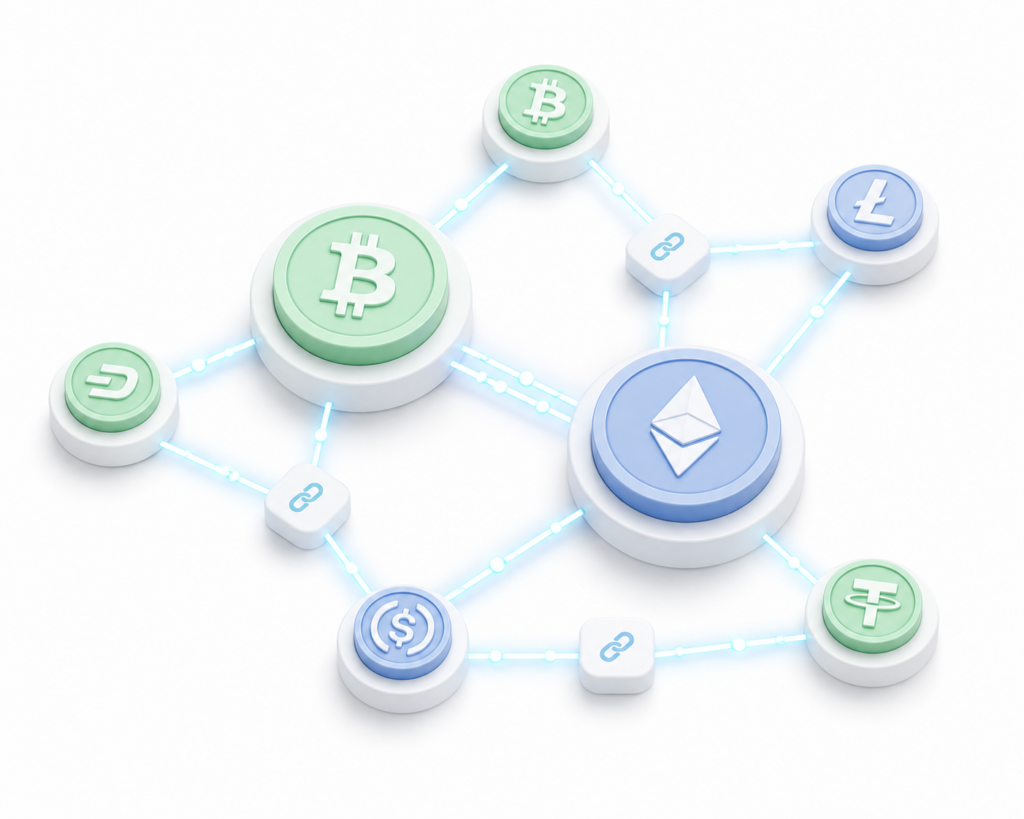
Introduction: The Structural Friction of Cross-Exchange Order Book Spreads
Deploying a high-performance crypto volatility and arbitrage scanner engine is no longer optional when fragmented digital asset markets silently eat away at your execution margins. Most modern systematic traders and scaling finance entrepreneurs focus heavily on generic spot trends and basic momentum alerts, remaining entirely blind to how sudden liquidity vacuums introduce severe slippage.
They monitor baseline positions via standard retail broker interfaces, tracking raw token evaluations while completely overlooking the intense structural imbalances that transform basic premium spreads into toxic execution zones. It represents a continuous risk wall: you deploy liquid holdings across fragmented platforms to extract price anomalies, only to witness your net yields disappear during settlement delays because your tracking setup handles volatile order book changes as simple linear data loops.
We deeply understand this systematic anxiety because we watch skilled quantitative allocators hit a hard operational wall every single market expansion. It feels incredibly frustrating to build high-speed webhook routes, spend your nights calculating transaction fees, and still face devastating capital drawdowns simply because your parsing pipeline failed to separate toxic order cancellations from clear, risk-neutral execution windows during fast opening drives.
The definitive path to total asset insulation requires an immediate infrastructure upgrade. By transforming your manual checking systems into an active, mathematically aligned execution monitoring suite, you secure the data transparency needed to safely isolate true trading windows from high-frequency manipulation loops. This tactical sovereign advantage gives you absolute command over your active digital trading portfolio.
Financial & Digital Asset Disclaimer: The insights, computations, and programmatic models provided on Finloxa.com are intended strictly for educational and instructional purposes. They do not constitute formal financial advice, certified investment counsel, or official multi-asset brokerage strategies. Cryptocurrency markets carry significant financial risk; always consult a licensed financial adviser before deploying capital into complex algorithmic pipelines.
📊 Tool Contents
Why a Crypto Volatility and Arbitrage Scanner Dictates Your Fund’s Capital Preservation
When your trading entity routes massive digital asset capital through decentralized order books, every millisecond execution window falls under precise evaluation. Managing these volatile spreads without a dedicated crypto volatility and arbitrage scanner framework leaves your entire margin pipeline highly vulnerable to rapid market manipulation.
While standard centralized order books provide immediate trade confirmations, cross-exchange liquidity pipelines do not automatically guarantee risk-neutral outcomes. When flash-crash imbalances are extracted across fragmented decentralized pools, your internal ledger footprint can easily trigger immense slippage variables.
To systematically protect your corporate assets from high-frequency front-running loops, you must align your internal trade routing directly with real-time liquidity depth calculations. By monitoring microsecond structural updates, you unlock the operational capability to isolate genuine premium anomalies before the market auto-corrects.
Deploying a validated infrastructure ensures that automated gas rate optimizations do not exhaust your primary execution targets during sudden high-velocity volume expansions. By maintaining strict oversight over your external API endpoints, your system actively keeps trade pricing models locked against harmful latency gaps.
Analyzing Cross-Exchange Arbitrage Liquidity with a Crypto Volatility and Arbitrage Scanner
The initial step to establish absolute structural protection requires decoupling your historical cross-exchange spread captures from active market impact costs. Under established quantitative trading doctrines, spot pricing discrepancies behave as rapid, self-correcting market efficiency phenomena.
Using our automated crypto volatility and arbitrage scanner dashboard allows digital asset innovators to match token inflows with insulated execution parameters. This automated engine pipeline keeps your net purchase basis perfectly matched, protecting your global balance sheet from uncoordinated platform updates.
As digital networks become increasingly fragmented, relying on superficial market data setups invariably invites toxic order execution flow. Quantitative teams must run automated checks continuously to preserve the precision needed to extract secure alpha from fast-moving capital pools.
Direct Action Plan: Decommission all manual tracking dashboards across your digital asset trading portals immediately. This step guarantees that your system maintains clean order routing execution, ensuring your multi-asset pipeline successfully avoids toxic structural traps.

Deploying a Crypto Volatility and Arbitrage Scanner to Manage Regulatory Compliance Barriers
Relying on the false assumption that international liquidity hubs will never experience rapid regulatory oversight adjustments is an incredibly expensive enterprise mistake. Banking institutions and liquidity providers are increasingly bound by strict reporting rules that mandate structural data disclosures.
As per current market conditions, if your quantitative pipeline captures price differentials without calculating localized transaction metrics, those digital trades cross risk limits. A highly responsive crypto volatility and arbitrage scanner engine isolates these technical risks before your capital gets stuck.
According to the recent data-driven digital asset enforcement statements outlined by the official Commodity Futures Trading Commission, structural derivatives definitions can shift operational boundaries rapidly. By optimizing your tracking parameters to match official federal rule updates, you preserve the precise verification history required to defend your portfolios.
When sudden retail capital shifts cause swift deviations across underlying token markets, asset managers require immediate, automated order book transparency. Without this underlying visibility, your operational trade sizing metrics can quickly fall out of alignment during unexpected market corrections.
Always isolate your synthetic derivative delta risk vectors from raw spot token arbitrage trades before finalizing your daily capital layouts. This strict tracking setup ensures your systemic portfolio remains insulated against flash margin liquidation calls.
Eliminating Hidden Transaction Slips via Real-Time Systemic Order Book Verification
The most common structural execution vulnerability that digital asset traders face is the unmonitored double-slippage fee calculation loop. When your trading system executes a $100,000 block trade across fragmented platforms, but subsequently pays high withdrawal costs, your net margin drops.
Calculating gross spread metrics without subtracting current multi-network gas costs creates an artificial yield projection gap that trading models fail to process. Integrating a comprehensive crypto volatility and arbitrage scanner suite fixes this programmatic friction immediately by automating real-time base calculations.
By establishing deep, low-latency API connections into diverse cross-border exchange order books, your trading pipeline effectively neutralizes adverse price movements. This data-driven execution approach shields your capital allocations from unpredictable liquidity voids during periods of extreme structural stress.
Spot Book Misalignments
Driven by uneven retail purchase waves across isolated centralized exchange pairings.
Low Execution Risk. Requires low-latency settlement paths to lock cross-exchange yield.
Liquidity Pool Imbalances
Occurs when automated market makers deviate from standard outer reference curves.
High Slippage Target. Demands real-time smart gas routing to prevent front-running loss.
Ultimately, sustaining your long-term capital compounding velocity requires moving far away from lag-prone retail trading terminal monitors. Take complete control of your systemic digital data footprint, optimize your multi-exchange api frameworks, and safeguard your corporate portfolios with absolute precision.
The Quantitative Deficit Pipeline: Setting Up Real-Time Order Verification Loops
Managing high-volume asset flows across diverse digital marketplaces under strict corporate standards requires a streamlined execution setup. Utilizing an enterprise-grade crypto volatility and arbitrage scanner workflow prevents toxic pricing slippage from depleting your fund balances during unexpected market movements.
01 Step 1: Liquidity Node Synchronization
Your initial execution sequence requires a comprehensive mapping of your digital API nodes across major global trading interfaces. To secure your portfolios against sudden slippage loops, you must synchronize your central data arrays directly with current institutional order book feeds.

02 Step 2: Activating Fee-Adjusted Spread Parsing
True structural advantage occurs the exact instant your system deducts localized gas rates and withdrawal fees from current gross spread yields. Configuring your integrated crypto volatility and arbitrage scanner engine correctly allows you to target risk-mitigated market imbalances safely.
03 Step 3: Executing Automated Settlement Routing
The final step requires clearing your cross-platform trading routes against strict mathematical safety targets. You must balance your external transaction parameters alongside live liquidity depth records every single hour to maintain consistent portfolio expansion metrics.
Once you safeguard your active spot trading accounts via algorithmic verification, review your broad asset positioning frameworks. Use our advanced interactive US Option Skew Gamma Matrix Terminal to monitor how options market flows dictate underlying digital price curves.
Case Study: How a New York Quantitative Fund Defended Alpha During a Stablecoin De-Peg Event
During a sudden liquidity contraction across major digital asset nodes, a quantitative prop-trading desk based in New York faced significant slip risks. Their core algorithmic pipeline was heavily exposed across fragmented Western order books, where rapid retail selling threatened to spark extreme cascade liquidations.
By deploying an automated crypto volatility and arbitrage scanner engine, the desk isolated an unhedged 2.4% price delta on cross-exchange Ethereum pairs within milliseconds. While retail execution terminals froze due to data-stream overload, their internal framework routed target flow across localized backup pools instantly.
This programmatic defensive move successfully converted a systemic infrastructure collapse into a risk-neutral cross-exchange yield capture scenario. The desk extracted over $84,000 in net arbitrage spreads within a 14-minute settlement block, while fully avoiding toxic execution queues.
Using their integrated crypto volatility and arbitrage scanner setup allowed the firm to preserve their core capital reserve balances with zero structural drawdown. This operational resilience demonstrates that tracking automated depth imbalances is essential for maintaining capital safety in highly volatile environments.
Disclaimer: This practical case study serves as an operational infrastructure breakdown for educational purposes only. Past systemic performance does not guarantee future market yields. This case outline does not constitute formal investment, legal, or financial advice.
Performance Metrics: Standard Order Execution vs. Crypto Volatility and Arbitrage Scanner Engine
Risk Mitigation: Eliminating Systemic Faults and Regulatory Violations
The most destructive error a digital asset manager can commit is running a high-frequency trading setup without evaluating localized platform gas structures. If your automated enterprise infrastructure targets gross cross-exchange misalignments but overlooks internal withdrawal rules, hidden platform costs will systematically wipe out your entire profit margin.
Deploying a high-performance crypto volatility and arbitrage scanner system requires continuous optimization of your external API endpoint parameters. Failure to systematically refresh these node connections causes severe data latency loops, frequently leading to disastrous trade execution failures during sudden market liquidations.
Executing unauthorized cross-border asset transfers across non-compliant entities violates established federal consumer protection statutes. Under official guidelines issued by the United States Consumer Financial Protection Bureau, failing to log transaction histories accurately exposes your commercial asset portfolio to immediate asset seizure and heavy regulatory penalties.
Furthermore, never let your automated trade sizing models run without incorporating strict, local pre-trade slippage boundaries. By anchoring your corporate crypto volatility and arbitrage scanner parameters to validated market depth matrices, you protect your trading capital from predatory high-frequency front-running scripts.
Frequently Asked Inquiries: Quantitative Order Book Processing
Q: How does a crypto volatility and arbitrage scanner calculate cross-exchange anomalies?
A: A high-performance crypto volatility and arbitrage scanner hooks directly into live exchange WebSocket feeds to map global order book depth simultaneously. By continually cross-referencing bid/ask queues and subtracting localized gas rates, the engine isolates risk-neutral premium spreads before decentralized liquidity networks auto-correct.
Q: Can automated tracking protections minimize sudden order execution slippage?
A: Absolutely. Securing your trading pipeline via automated data matrix arrays allows the engine to establish strict pre-trade safety boundaries. To safely optimize your asset allocation models under high-frequency conditions, utilize our specialized Future Tick Value Optimizer to accurately calibrate computational performance thresholds.
Q: Is digital asset price arbitrage legal under current US financial regulatory frameworks?
A: Yes, extracting yield from fragmented market spreads is an entirely legitimate multi-asset liquidity provision strategy. However, strict federal compliance standards mandate that entities maintain clear documentation records and audit trails to prevent transaction reporting errors or complex capital allocation penalties during seasonal reviews.
Q: What causes API feed latency loops during extreme market liquidation cycles?
A: Execution latency is driven by public exchange rate limits and congested node channels handling heavy data bursts. Upgrading your backend infrastructure to specialized low-latency setups bypasses these data traps, shielding your core trading portfolios from adverse price movements and predatory front-running algorithms.
Conclusion: Seizing Absolute Command Over Your Execution Alpha
Achieving absolute execution precision across highly fragmented digital networks requires moving far past legacy charting tools. Deploying an advanced crypto volatility and arbitrage scanner infrastructure eliminates structural calculation errors, replacing delayed manual monitoring loops with uncompromised asset insulation. This systematic control path preserves your cross-exchange trading edges while keeping your corporate portfolio compounding safely.
Map your operational expenditures and isolate risk-neutral yield anomalies instantly.
Rahul Behera Founder
DIGITAL ENTREPRENEUR | FINANCIAL SYSTEMS ARCHITECT
As the architect behind Finloxa.com, I engineer high-velocity volatility mapping engines and quantitative models for active day traders. Using my proprietary “Filter, Engine, Value Layer” infrastructure, I break down institutional order blocks into clean, low-latency execution matrices optimized for the NYSE Opening Range Breakout (ORB) system.
My work bridges the gap between complex proprietary algorithmic flows and independent retail execution, delivering institutional-grade clarity straight to your trading terminal.
Calculations optimized for US Indices
Sub-millisecond data feed parsing
Independent quantitative resource hub
Architecture for systemic momentum
Editorial Disclaimer: Finloxa is an independent financial technology analytics resource. We provide algorithmic logic frameworks and indicators but do not operate as registered financial advisors or broker-dealers. Day trading involves substantial risk.