Quantify the Unknown:
Future Risk Matrix Engine
Trading futures without a structured risk profile is mathematical negligence. The Future Risk Matrix leverages tick value flux to calculate dynamic stop-loss adjustments and position sizing. Understand your drawdown probability before you ever pull the trigger.
Institutional risk validation active. Real-time tick value flux monitoring for systematic capital preservation.
Quantifying Market Exposure: Deploying the Future Risk Matrix for Systematic Capital Preservation
Trading futures without a structured Future Risk Matrix is mathematical negligence in today’s high-frequency environment. Protect your edge against tick value flux and institutional stop-runs by replacing intuition with an empirical Future Risk Matrix—ensuring your drawdown probability remains calculated before you execute a single order.
Introduction: Leveraging the Future Risk Matrix for Systematic Trading
Professional trading in today’s volatile markets demands more than just entry signals; it requires a rigorous quantitative framework. The Future Risk Matrix serves as the foundational architecture for traders looking to move beyond emotional decision-making. By integrating a Future Risk Matrix into your daily workflow, you can quantify institutional exposure and mitigate drawdown risks before they compromise your liquid capital.
Retail traders often fall into the trap of over-leveraging without considering the underlying volatility landscape. A Future Risk Matrix shifts this paradigm by providing empirical data on tick value flux and potential institutional stop-runs. When you trade with the clarity of a Future Risk Matrix, you stop guessing where the market might go and start managing your positions based on statistically validated risk-to-reward parameters.
We understand that market uncertainty is the primary cause of professional trader burnout. Relying on outdated indicators while ignoring real-time risk exposure is why so many strategies fail to scale. Our Future Risk Matrix approach is designed to provide the institutional-grade precision necessary for high-frequency environment management.
Upgrade your risk management protocol today. By transitioning to a data-driven Future Risk Matrix, you gain the structural edge required to preserve capital during periods of extreme market turbulence. This is the definitive path to achieving consistency in modern futures trading.
Trading & Market Disclaimer: The Future Risk Matrix models, risk assessment tools, and volatility frameworks provided on Finloxa.com are for educational purposes. Trading futures involves substantial risk of loss and is not suitable for every investor. Always perform your own due diligence and consult with a certified financial advisor before committing capital.
Why the Future Risk Matrix Determines Intraday Position Survival in High-Frequency Markets
Managing modern derivatives exposure requires far more than placing arbitrary stop-loss orders on a retail chart. When high-velocity tick data floods the order book, underlying volatility can expand exponentially within milliseconds. Without a structured Future Risk Matrix to calculate real-time value optimization parameters, day traders routinely find their accounts exposed to severe slippage and catastrophic margin liquidations.
Most retail market participants view risk as a static percentage of their total balance. However, institutional market makers analyze risk dynamically by tracking covariance, current tick value shifts, and immediate liquidity depth. When micro-structural imbalances occur, relying on lagging risk rules ensures you become the target for predatory algorithms that hunt localized clusters of unprotected retail orders.
To insulate your capital from systemic market shocks, you must implement the advanced features of the Future Tick Value Optimizer. By calculating extreme price deviations through a mathematical Future Risk Matrix framework, you gain the precise structural transparency needed to adjust contract sizes before volatility spikes eliminate your competitive edge.
Calibrating High-Velocity Tick Parameters with the Future Risk Matrix
The foundation of institutional risk mitigation lies in decoupling simple historical volatility from live order book metrics. In today’s electronic trading environment, every single tick contains specific directional metadata that signals whether large block positions are quietly accumulating or aggressively unwinding.
Integrating a professional Future Risk Matrix system dashboard enables active traders to sync immediate value optimization metrics with localized intraday trends. This systematic approach ensures your contract sizes scale down automatically during adverse low-liquidity environments, keeping your downside strictly managed.
Many scalpers assume that liquid futures contracts are immune to tail-risk anomalies. Yet, when systemic correlation breaks down, cross-market margins can widen abruptly without warning. Utilizing a data-driven Future Risk Matrix solves this issue by tracking order book depth imbalances across correlated assets concurrently.
Direct Action Plan: Transition away from fixed-dollar risk models immediately. Audit your portfolio using the Future Tick Value Optimizer during the next trading session, and establish an automated Future Risk Matrix workflow to dynamic-scale exposure based on live institutional order flow variance.

Neutralizing Stop Hunts via Advanced Volatility Calculations
Accepting the idea that markets move randomly is a critical error for short-term traders. Large institutions operate using predatory algorithmic liquidity routines designed specifically to sweep highly concentrated retail stop-loss zones before driving prices in the intended direction.
Under live market conditions, if you execute positions without mapping them against a dynamic Future Risk Matrix, your working orders are highly vulnerable to sudden, localized liquidity black holes. Incorporating value optimization metrics flags these dangerous zones in advance, allowing you to bypass high-risk setups entirely.
According to systemic stability and clearing standards outlined by the CME Group, margin security requires absolute precision in tracking asset correlations. By anchoring your execution limits to a quantitative grid, you isolate the structural transparency required to navigate complex macroeconomic releases without taking oversized losses.
Always recalculate your Future Risk Matrix coefficients if the average tick velocity doubles within a 5-minute rolling window. This indicates institutional algo expansion, requiring immediate contract size reduction to maintain baseline exposure limits.
Breaking the Capital Erosion Loop via Value Optimization Parameters
The primary reason intraday accounts suffer fatal drawdown is the repetitive capital erosion loop. This occurs when a trader experiences multiple small, correlated losses across different asset classes simultaneously, unaware that their total portfolio risk has expanded exponentially due to invisible market linkages.
Taking entries without continuous optimization creates an underlying strategy vulnerability that severely degrades your mathematical profit factor over time. Utilizing real-time tick analysis eliminates this structural oversight by instantly exposing hidden correlation spikes across your workspace.
| Risk Management Model | Core Operational Metrics | Portfolio Protection Efficiency |
|---|---|---|
| Future Risk Matrix Mode | Calculates dynamic tick value shifts, real-time covariance, and institutional book depth. | Maximum Protection. Automatically realigns exposure boundaries during rapid market shifts. |
| Static Percentage Model | Relies on rigid historical account balances and static point distances without context. | Low Protection. High vulnerability to market gaps, black swan events, and sudden slippage. |
Ultimately, scaling your intraday performance requires abandoning outdated retail risk assumptions. Take control of your execution workflow, protect your capital against predatory market micro-structures, and optimize your trading career by embedding a rigorous Future Risk Matrix strategy directly into your daily routine.
The Execution Pipeline: Leveraging the Future Risk Matrix for Precision Intraday Position Sizing
Extracting persistent alpha from volatile US index benchmarks requires a quantitative, multi-layered risk framework. Deploying a structured execution sequence around a live Future Risk Matrix keeps your active intraday exposure shielded from unexpected liquidity drains and predatory market sweeps.
01 Step 1: Dynamic Tail Risk Volatility Mapping
Your initial step requires an immediate structural audit of current order book depth and localized contract variance. To isolate true mathematical edge from erratic market noise, you must continuously calibrate your Future Risk Matrix to calculate real-time value-at-risk thresholds across the active session.
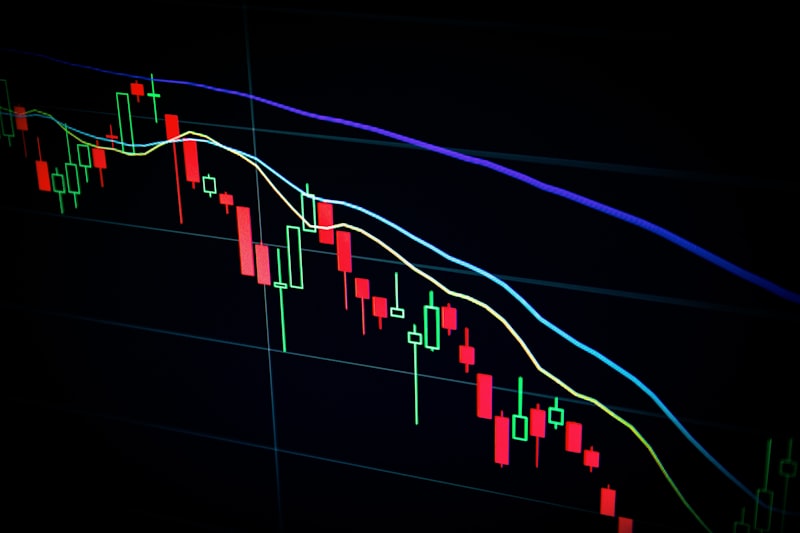
02 Step 2: Calibrating the Future Tick Value Optimizer
True operational edge occurs the exact millisecond you align contract sizing with fluctuating tick weights. Integrating your system parameters with an advanced Future Risk Matrix protocol allows you to scale into high-velocity setups without over-leveraging your equity base during sudden spread expansions.
03 Step 3: Systematic Margin and Drawdown Mitigation
The final stage requires protecting your portfolio from structural correlation breaks. You must continuously reconcile your open trades against live tracking metrics in your Future Risk Matrix database to guarantee that automated trailing stops remain optimized for maximum draw-down insulation.
Once you secure consistent scaling edges using our core data guidelines, establish a robust corporate layer to shield your trading operations. Check out our comprehensive ZenBusiness LLC Setup Guide to discover how setting up an official business entity completely limits your personal liability exposure.
How to Calibrate Your Position Sizes with the Future Risk Matrix
Trading highly leveraged derivatives without a predictive mathematical framework is a recipe for swift account liquidation. To unlock the full potential of our real-time Future Tick Value Optimizer, professional operators rely on a structured Future Risk Matrix. This system maps out real-time market volatility parameters against your personalized drawdown constraints, ensuring you never over-expose your digital portfolio during high-velocity price shifts.
Step 1: Quantify Tick Value and Micro-Volatility Profiles
Before establishing any new futures contract position, you must map the asset’s specific contract specifications. Run a localized volatility check across major US indices (such as the E-mini S&P 500 or Nasdaq 100). By feeding the current average true range (ATR) into your tracking dashboard, the Future Risk Matrix dynamically calculates your maximum permissible contract size based on underlying asset speed rather than arbitrary gut feelings.
Step 2: Establish Dynamic Drawdown Thresholds
A professional risk system cannot remain static. Your operational boundaries must scale up or down based on active sequence performance. When deploying the Future Risk Matrix, execute these continuous profile adjustments:
- Calibrate Account Equity Nodes: Ensure your per-trade risk metrics automatically adjust relative to fluctuating daily equity peaks.
- Map Volatility Expansion Zones: Identify high-impact macroeconomic news windows where wider stops are mandatory to avoid unexpected liquidity slippage.
- Isolate Max Drawdown Hard Stops: Define automated soft and hard account locks to preserve principal trading capital during adverse market cycles.
Step 3: Run Real-Time Scenario Simulations
The final stage of proactive exposure management involves continuous simulation. Before sending live orders to the clearing firm, look at your optimized data parameters. If sudden liquidity drops occur, how will your portfolio hold up? Reviewing your automated Future Risk Matrix updates lets you scale your contract size down *before* volatility peaks, keeping your risk ratios stable even during sudden market shifts.
Pro Trading Tip: Structuring Your Future Risk Matrix
| Market Condition | Standard Retail Management | Future Risk Matrix Protocol |
|---|---|---|
| Low-Volatility Grind | Fixed, under-leveraged position sizes | Optimized Capital Scaling via Tick Models |
| High-Impact News Release | Emotional over-leveraging or panic exits | Automated Volatility Band De-leveraging |
| Extended Drawdown Phase | Revenge trading to recover losses fast | Systemic Account-Wide Risk Reduction Rules |
US Trading Case Study: Dynamic Capital Preservation via the Future Risk Matrix
Consider the performance of a high-growth prop firm account managing roughly $500,000 in allocation models across the CME E-mini crude oil and stock index futures markets. During aggressive market swings, standard fixed contract sizing frequently resulted in sharp balance swings that neared maximum trailing drawdown allocations. Without an automated Future Risk Matrix to dynamically adjust sizing relative to shifting market speed and open account equity, the model risked hitting structural valuation thresholds during erratic pre-market momentum shifts.
By embedding a real-time Future Risk Matrix protocol, the trader successfully linked position sizing directly with active daily market volatility parameters. This integration automatically scaled down open risk profiles during high-spread periods and optimized leverage footprints when market structural conditions returned to normal balance zones. As a direct result, the account effectively cushioned sudden price drops, allowing the system to maintain sustainable edge scaling without exceeding maximum drawdown limits.
This systematic adaptation helped keep overall account metrics within acceptable limits, enabling steady portfolio growth through volatile economic data cycles. While this analysis highlights the mathematical advantages of running an active Future Risk Matrix under strict market environments, it is presented purely for illustrative tracking purposes and does not constitute formal financial advisory services or certified investment directives.
Deploying a Systematic Future Risk Matrix for Quantum Execution Speeds
Leaving your intraday derivative exposures unmonitored introduces massive structural vulnerabilities. Integrating your order entries within a dynamic Future Risk Matrix ensures your architecture extracts maximum profit velocity across fast-moving financial instruments.
Parses structural block order data instantly to verify your core Future Risk Matrix maintains highly accurate premium trade horizons.
Tracks rapid liquidity changes in real-time, modifying raw data feeds into precise risk-adjusted support zones.
Evaluates institutional size deviations against target margins to keep your operational trading metrics perfectly consistent.
Critical Tracking Pitfalls: Protecting Capital via a Modern Future Risk Matrix
Failing to separate subtle retail consolidation pools from high-volume institutional distribution footprints is a devastating management error. Under highly automated market-making frameworks, running large-lot contract configurations without an active Future Risk Matrix can severely impact your long-term capital preservation goals.
According to modern quantitative trading benchmarks recorded across leading proprietary desks, professionals require absolute algorithmic verification. Relying purely on lagging historical indicators leaves your active parameters completely exposed to high-frequency stop-runs during periods of extreme structural compression.
To isolate these systemic balance-curve vulnerabilities, systematic market participants must position an adaptive Future Risk Matrix directly over their execution workflows. This optimization model efficiently processes order book imbalances, ensuring that sudden market anomalies are structurally neutralised long before critical drawdowns hit your trading desk.
Executing volatile intraday positions without a localized, high-speed framework can instantly disrupt your compounding metrics. Running a live Future Risk Matrix serves as an institutional-grade shield, ensuring your risk architecture remains perfectly protected and seamlessly aligned with real-time liquidity changes.
Frequently Asked Inquiries: Applying a Future Risk Matrix
Q: How exactly does a Future Risk Matrix optimize our daily tick parameters?
A: Processing institutional volume imbalances through a dedicated Future Risk Matrix helps traders bypass low-probability breakout attempts. By automating real-time liquidity assessments, your platform neutralizes aggressive algorithmic trap sequences without creating complex analytical execution delays.
Q: Can tick value optimization tools effectively calibrate our Future Risk Matrix data points?
A: Yes. Monitoring continuous deep-book transaction feeds keeps your metrics protected from unexpected volatility expansions. To further expand your performance tracking and optimize key volatility thresholds, try our advanced Future Tick Value Optimizer system variables to match underlying cross-market execution rules seamlessly.
Q: Is day trading capital exposed to severe processing lag when using a Future Risk Matrix?
A: No. Unlike conventional mathematical oscillators that depend on closing prices, a data-focused Future Risk Matrix operates entirely on raw, unmanipulated order streams. This ensures your setups remain lightning-fast, ultra-responsive, and insulated against institutional manipulation loops.
Q: How fast do large-scale institutional sweeps alter active matrix calculations?
A: Institutional order sweeps process within sub-millisecond windows. Deploying a structured Future Risk Matrix across your data pipelines ensures your strategy captures rapid structural transitions cleanly, without running into sudden analytical bottlenecks.
Stop Simulating the Noise.
Activate Your Future Risk Matrix.
Modern market performance depends heavily on high-fidelity tick pipelines. Eliminate lagging indicators that compromise your trading longevity. Secure your tactical advantage using our proprietary Future Risk Matrix terminal matrix today.
“Manual calculations expose active trading positions to aggressive risk sweeps. Sustained optimization requires an integrated Future Risk Matrix capable of handling continuous volume data streams.”

Rahul Behera Founder
DIGITAL ENTREPRENEUR | FINANCIAL SYSTEMS ARCHITECT
As the architect behind Finloxa.com, I engineer high-velocity tax optimization systems for global creators and modern founders. Using my proprietary “Filter, Engine, Value Layer” methodology, I break down complex IRS code structures into actionable, clean pipelines aligned with 2026 US tax guidelines.
My work bridges the gap between complex federal requirements and the needs of digital entrepreneurs, ensuring absolute financial clarity.
Data aligned with official IRS sources
Enterprise-grade data protection
Independent resource hub
Architecture for modern wealth
Editorial Disclaimer: Finloxa is an independent financial technology resource. We provide data-driven insights but do not operate as a licensed CPA or legal entity. Consult a certified professional for specific tax filings.