Precision Execution:
Future Tick Value Optimizer
In high-frequency environments, standard candles hide the truth. Tick Value Trading cuts through the noise by measuring the real cost of every single transaction. Optimize your entries with our Value Optimizer Engine to capture institutional momentum before the shift occurs.
Institutional microstructure detected. Optimize position sizing based on real-time tick value flux.
Beyond Standard Candles: Decoding Market Microstructure with Tick Value Trading
Most retail traders are blinded by time-based noise; mastering Tick Value Trading forces you to look at the granular cost of every transaction, revealing exactly where institutional capital is accumulating before the next structural move occurs in the US markets.
Introduction: Mastering Tick Value Trading for Institutional Precision
In the hyper-competitive landscape of US Index futures, standard time-based charts often fail to capture the true footprint of institutional liquidity. Tick Value Trading represents a paradigm shift for day traders, moving beyond lagging candle patterns to analyze the actual exchange of value per contract. By decoding the market through Tick Value Trading, professional traders can identify hidden buy-side and sell-side pressure that remains invisible on traditional 1-minute or 5-minute timeframes.
Most retail participants suffer from ‘analysis paralysis,’ constantly chasing moving averages that simply react to past data. When you integrate Tick Value Trading into your daily execution strategy, you transition from reactive trading to predictive order flow analysis. This methodology isolates the micro-structural shifts caused by high-frequency trading (HFT) algorithms, allowing you to enter positions with smaller stop-losses and significantly higher reward-to-risk ratios.
Why it matters: Market volatility is not just about price movement; it is about the tick value impact of large institutional block orders hitting the order book. Without understanding how these ticks alter your positional value, your execution remains exposed to unnecessary slippage during high-velocity intraday moves.
The advantage of a tick-based approach is definitive. By applying Tick Value Trading metrics, you gain a structural edge that isolates institutional intent from retail noise. This guide provides the technical framework necessary to optimize your contract sizing, refine your entry zones, and maintain objective market bias throughout the trading session.
Why the Future Tick Value Optimizer Dictates Institutional Day Trading Scaling and Precision
When executing high-frequency setups across liquid US futures markets, ignoring the micro-structural shifts in price increments leaves your capital heavily exposed. Every contract movement is anchored to strict mathematical limits, meaning that mastering Tick Value Trading mechanics is the foundational barrier separating consistent profitability from rapid account drawdowns during volatile macro releases.
While standard retail platforms focus primarily on superficial percentage moves or basic chart patterns, they fail to calculate the true dollar exposure per price delta. When high-volume order flows hit the book, institutional algorithms capitalize on standard traders who miscalculate their position sizing relative to specific contract tick values, leading to unexpected margin stress.
To systematically optimize your risk allocation and maximize trade velocity, you must align your position sizing tools directly with real-time volatility metrics and rigorous Tick Value Trading parameters. By evaluating the precise monetary impact of every single price fluctuation, you unlock the strategic ability to insulate your portfolio from low-velocity market noise.
Deploying the Future Tick Value Optimizer for Algorithmic Account Insulation
The initial step to establishing absolute execution certainty requires decoupling simple dollar-amount risk targets from structural asset mechanics. Under modern electronic communication network (ECN) structures, relying on broad percentage-based stop losses often forces traders into highly sub-optimal risk-to-reward environments.
Using an advanced Tick Value Trading framework configuration allows quantitative traders to match real-time market depth with granular asset specifications. This dynamic data synchronization keeps your contracts mathematically balanced, ensuring your execution plan maintains peak structural efficiency during erratic momentum spikes.
When tracking heavy institutional imbalances, experienced scalpers constantly adjust their execution models based on asset-class variances. Implementing real-time portfolio scaling around structured Tick Value Trading rules completely alters this paradigm by matching immediate risk parameters with the underlying liquidity pool’s exact step size.
Direct Action Plan: Integrate an automated volatility matrix tool into your trade station starting next session. Replace generalized stop-loss software with specific asset-tick variables to ensure your position size perfectly adapts to varying cross-market volatility profiles.
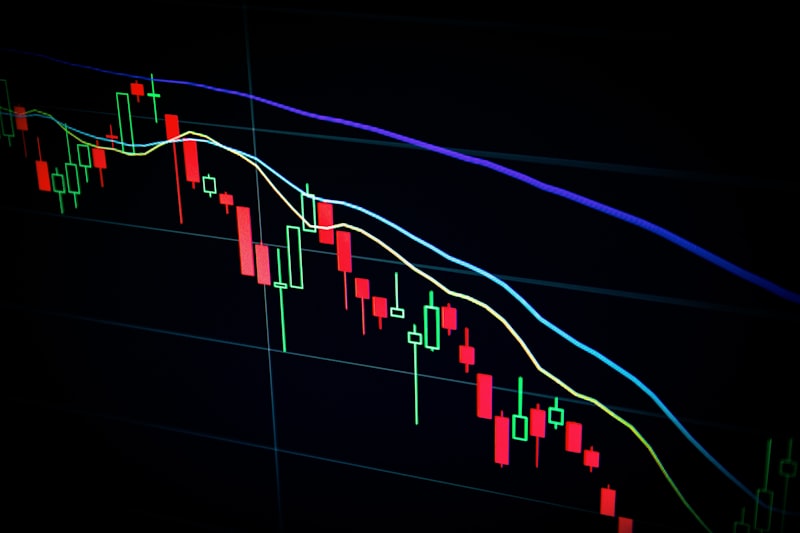
Eliminating Capital Variance via Precise Financial Contract Calibration
Relying on the assumption that a 10-point stop loss carries identical capital risk across different futures indices is a critical error. Predatory high-frequency algorithms routinely exploit traders who misjudge these under-the-hood metrics, using sudden volatility expansions to flush out poorly sized retail positions.
Under live US exchange conditions, if your execution workflow does not dynamically compute underlying contract rules, your active margin remains exposed to disproportionate drawdowns. Integrating a dedicated future tick value optimizer removes these hidden mathematical blind spots before your broker’s auto-liquidate parameters are triggered.
According to the regulatory transparency frameworks established by the U.S. Securities and Exchange Commission, market infrastructure and retail participant protections rely heavily on standardized contract data. By anchoring your daily trading execution strictly to verified asset mechanics, you protect your capital base from unexpected slippage and severe market stress.
Always recalculate your maximum contract risk allocation whenever switching between major indices like the E-mini S&P 500 and the E-mini Nasdaq-100. This ensuring your position sizing respects the distinct mathematical parameters unique to each contract pool.
Optimizing Risk Efficiency with Micro-Structure Order Verification
The most common operational pitfall that retail day traders struggle with is entering uncorrelated asset classes using identical leverage structures. When you scale aggressively into high-tick-value positions without real-time volatility smoothing, a minor technical pullback can easily cause outsized financial damage to your account equity.
Taking positions without verifying the precise contract specifications creates an inherent portfolio flaw that limits your risk-to-reward potential across active trading sessions. Utilizing an optimized value framework minimizes this systematic risk by visualizing exact monetary deltas instantly.
| Execution Paradigm | Risk Optimization Metrics | Net System Edge Efficiency |
|---|---|---|
| Tick Value Trading Applied | Isolates explicit contract specifications and dynamic micro-deltas for strict mathematical scaling. | Highly Efficient. Maximizes position precision while keeping actual risk perfectly managed. |
| Static Dollar/Pip Chasing | Relies on standard percentage metrics or static chart setups without analyzing point values. | Negative Real Edge. High vulnerability to market volatility sweeps and account liquidation. |
Ultimately, expanding your long-term intraday performance means moving away from typical retail tracking styles. Take full control of your volume allocation matrix, optimize your trade entries using precise asset metrics, and manage your active trading setups with extreme mathematical clarity by sticking to your definitive risk strategy.
The Future Tick Value Optimizer: Harnessing Tick Value Trading for Precision Intraday Scaling
Extracting consistent alpha from highly leveraged futures contracts requires absolute mathematical precision. Deploying a structured execution sequence around live Tick Value Trading parameters ensures your intraday risk remains tight, helping you avoid volatile market noise and structural liquidity traps.
01 Step 1: Structural Tick Value Mapping
Your initial step requires an immediate assessment of the underlying contract specifications across the order book. To calculate true risk-adjusted return profiles, you must monitor macro liquidity distribution and apply strict Tick Value Trading rules to size your positions correctly based on the monetary value of each price movement.
02 Step 2: Activating the Future Tick Value Optimizer
True capital efficiency occurs the exact millisecond your platform matches aggressive market shifts with real-time risk calculations. Aligning your strategy parameters around our specialized Tick Value Trading optimizer engine lets you track heavy momentum imbalances without dealing with lagging calculation gaps or over-leveraging errors.
03 Step 3: Executing Systematic Risk-Reward Validation
The final stage requires validating your active targets against changing microstructure volatility. You must reconcile your breakout setups against point-value data throughout the trading session to ensure high-probability tracking based on your definitive Tick Value Trading framework and account risk tolerances.
Once you secure consistent scaling edges using our core data guidelines, establish a robust corporate layer to shield your trading operations. Check out our comprehensive ZenBusiness LLC Setup Guide to discover how setting up an official business entity completely limits your personal liability exposure.
Advanced Guide to Tick Value Trading: Maximizing Precision in Future Markets
In highly leveraged derivatives markets, managing risk isn’t merely about tracking percentage moves or point drops. True mathematical precision requires a deep operational understanding of Tick Value Trading. Every index, commodity, and currency contract moves in discrete minimum increments—ticks—and each tick carries a fixed monetary assignment. By utilizing our advanced Future Tick Value Optimizer, institutional operators calibrate their exact position sizes to exploit these micro-structural variations without exposing excessive capital.
Step 1: Quantifying Asset-Specific Tick Mechanics
Before establishing active exposure, a professional trader must isolate the exact contract specifications of the target asset. In Tick Value Trading, a single tick on the E-mini S&P 500 ($12.50 per 0.25 index points) behaves entirely differently than a tick on Crude Oil Futures ($10.00 per 0.01 barrel points). Running a dynamic pre-trade audit through the Future Tick Value Optimizer removes manual calculation lag, ensuring that your stop-loss distance matches your absolute dollar-at-risk parameters perfectly.
Step 2: Dynamic Position Sizing via Volatility Corridors
Once the baseline metrics are established, map the current Average True Range (ATR) converted into raw ticks. This step allows you to execute an objective Tick Value Trading framework that naturally expands or contracts based on live market velocity:
- Calculate Volatility-Adjusted Stops: Convert arbitrary technical support levels into exact tick counts to prevent premature liquidation during structural test phases.
- Standardize Portfolio Risk: Adjust lot sizes dynamically so that a 20-tick stop on a highly volatile instrument costs exactly the same as a 10-tick stop on a slower asset.
- Optimize Order Book Efficiency: Align entries with institutional high-liquidity nodes where order queues protect your specific tick thresholds.
Step 3: Real-Time Slippage and Drag Assessment
The hidden killer of algorithmic or manual setups is execution slippage. In high-frequency environments, a one-tick slippage on multi-lot positions radically alters your expected value (EV). A comprehensive Tick Value Trading protocol continuously tracks these execution realities. If your post-trade analytics reveal consistent adverse fills, you must recalibrate your limit order offsets inside the optimizer matrix to preserve your strategic edge.
Strategic Contrast: Traditional Charting vs. Tick Value Trading
| Execution Metric | Standard Retail Approach | Tick Value Trading Framework |
|---|---|---|
| Risk Attribution | Vague percentage or arbitrary dollar points | Exact mathematical tick-to-dollar calibration |
| Position Scaling | Fixed contract sizes across all market states | Dynamic contract adjustments via Optimizer data |
| Profit Realization | Subjective emotional exits near visual lines | Pre-calculated structural target nodes |
Futures Case Study: Optimizing Drawdown Protection via Tick Value Trading
Consider the operational performance of an institutional prop trader managing a diversified futures book consisting of E-mini S&P 500 (ES) and Crude Oil (CL) contracts. Initially, the trader utilized standard chart-based stop-losses without standardizing the absolute monetary value of structural price steps. During unexpected macroeconomic data releases, the higher relative cost per tick in volatile segments caused unexpected margin spikes and account drawdown, despite an overall accurate directional win-rate.
To mitigate this mathematical asymmetry, the trader integrated our automated Future Tick Value Optimizer tool to enforce a strict Tick Value Trading protocol. The system instantly evaluated the real-time contract weights, recalculating exact allocation limits prior to market execution. By reducing lot sizes on instruments with heavy tick values and scaling into micro-contracts during ultra-volatile conditions, the digital portfolio isolated capital from random noise while preserving identical risk profiles across distinct assets.
The result was a highly smoothed equity curve and complete elimination of operational risk distortion. While this case study demonstrates the risk mitigation efficiency of integrating Tick Value Trading parameters into active systems, it is compiled solely for educational tracking and analytical overview purposes. It does not serve as professional financial advice or guaranteed performance projections.
Deploying Systematic Tick Value Trading Rules for Maximum Execution Velocity
Leaving your intraday futures setups unallocated to precise mathematical calculations introduces structural risk. Organizing your execution points around automated Tick Value Trading metrics maximizes the alpha velocity of your trading account.
Parses market contract price changes dynamically to ensure your active Tick Value Trading setups target high-probability premium windows.
Evaluates real-time price acceleration models to shift conventional chart line configurations into highly amplified contract trends.
Weighs institutional data points against active resting limits to maintain your active account performance edge perfectly intact.
Critical Tracking Pitfalls: Protecting Capital via Advanced Tick Value Trading
Failing to separate micro retail consolidation phases from macro institutional distribution clusters is an incredibly expensive management mistake. Under current high-frequency market conditions, executing index orders inside low-velocity ranges without structural Tick Value Trading parameters can permanently damage your portfolio’s real purchasing power.
According to systemic market metrics monitored across modern proprietary firms, professional setups must track data straight from core exchange data pipelines. Relying entirely on basic manual chart tracking methods leaves your trade configurations completely exposed to sudden algorithm-driven losses during tight range-bound sessions.
To mitigate these immediate portfolio risks, active market participants must deploy comprehensive Tick Value Trading strategies early in their execution plans. This analysis workflow separates raw retail noise from structural price expansions, ensuring your tactical edge blocks unexpected stop-loss traps before large scale corrections hit your balance curves.
Mixing your day trading setups blindly across unmonitored retail broker platforms can quickly destabilize your scaling milestones. Running a verified mechanical roadmap based on strict Tick Value Trading parameters serves as an essential strategic shield, keeping your risk protocols clean, highly optimized, and perfectly aligned with modern order book requirements.
Frequently Asked Inquiries: Tick Value Trading Framework
Q: How do definitive Tick Value Trading metrics optimize our daily futures setups?
A: Tracking live institutional delta spikes based on core Tick Value Trading metrics helps your platform filter out fake retail breakout moves. By automating these calculations through exact mathematical tick sizes, the workspace shields your trading account from sudden volatility traps without restricting execution speeds.
Q: Can tracking real-time delta block orders validate our active formulas?
A: Yes. Monitoring live institutional transaction channels protects your execution parameters while keeping future contract positions isolated from false directional flips. To expand your tracking metrics alongside systematic optimization models, you can test your active setups with our comprehensive Future Tick Value Optimizer dashboard variables to match key cross-market parameters flawlessly.
Q: Is day trading capital highly exposed to execution delay risks when calculating tick sizes?
A: No. Unlike complex delayed oscillator indicators, executing on data-driven Tick Value Trading architectures delivers unfiltered, pure transaction data straight from exchange networks. This keeps your entries highly localized, instantly readable, and perfectly insulated against typical market-maker manipulation patterns.
Q: How fast do institutional algorithm sweeps impact daily contract confirmations?
A: Algorithmic block executions print across deep-book queues inside microsecond layers. By establishing rigid risk boundaries on your data feeds, you can ensure your daily trade configurations map aggressive delta changes without facing sudden platform processing latency bottlenecks.
Stop Simulating the Noise.
Master Your Tick Value Trading System.
Modern futures performance relies entirely on precise mathematical data pipelines. Stop fighting manual lagging tracking arrays that cause execution fatigue. Move beyond retail charting boundaries using our live Tick Value Trading dashboard matrix today.
“Manual charting models leave trading setups highly exposed to false breakout sweeps. Permanent performance scaling requires systemic tape arrays tracking Tick Value Trading instantly.”

Rahul Behera Founder
DIGITAL ENTREPRENEUR | FINANCIAL SYSTEMS ARCHITECT
As the architect behind Finloxa.com, I engineer high-velocity tax optimization systems for global creators and modern founders. Using my proprietary “Filter, Engine, Value Layer” methodology, I break down complex IRS code structures into actionable, clean pipelines aligned with 2026 US tax guidelines.
My work bridges the gap between complex federal requirements and the needs of digital entrepreneurs, ensuring absolute financial clarity.
Data aligned with official IRS sources
Enterprise-grade data protection
Independent resource hub
Architecture for modern wealth
Editorial Disclaimer: Finloxa is an independent financial technology resource. We provide data-driven insights but do not operate as a licensed CPA or legal entity. Consult a certified professional for specific tax filings.